5 Best Bass Guitars for Beginners (UK 2026 Review)
✓ Reviewed by the IDEAL PICKS Team
Best Beginner Bass Guitars for Comfortable Playing and Great Sound
Learning your first basslines is much more enjoyable with an instrument that feels comfortable and responds well to your playing. But beginner bass guitars vary considerably in neck shape, weight, pickup configuration and overall sound. Some are easier to handle straight away, while others may need adjustments before they feel right.
We’ve reviewed some of the best bass guitars for beginners, comparing their playability, sound quality, build and value for money. Our guide covers what makes each option worth considering, along with practical buying advice and tips to help you get started.
Quick PickS


 01
01
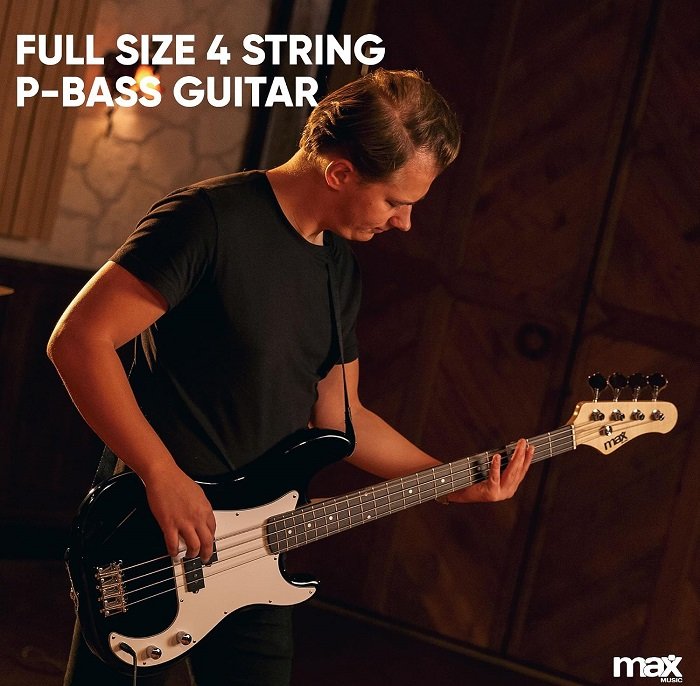
The Max GigKit provides a straightforward way to start learning electric bass without buying equipment separately. Its full-size instrument comes with a 40W amplifier, giving you a practical setup for playing along with favourite songs at home. The amplifier's headphone socket makes private practice possible, while the included tuner helps you develop the habit of checking your tuning before lessons and practice sessions.
Pros
- Complete guitar-and-amp package simplifies the first purchase
- Separate bass, middle and treble EQ controls allow sound adjustments
- 40W amplifier gives room for more than quiet bedroom practice
- Gig bag and strap help with carrying and playing standing up
- Gigajam lessons provide structured exercises for newcomers
02
The Squier Debut Precision Bass makes the first steps into electric bass playing feel approachable. Its slim neck and lighter body are comfortable for practising basic finger positions, simple riffs and steady rhythms. A single split-coil pickup gives you a punchy, rounded sound suited to pop, rock and soul. With uncomplicated controls, it keeps your attention on timing and cleanly played notes.
Pros
- Lightweight body is convenient for longer practice sessions
- Simple volume and tone knobs avoid complicated sound settings
- Split-coil design delivers a classic Precision Bass character
- Open-gear tuners allow small tuning adjustments
- Fender Play trial offers guided beginner exercises
03
The Fender CB-60SCE is an appealing option for beginners who enjoy the sound and feel of an acoustic bass. You can practise unplugged at home, then connect to an amplifier when you need more volume. Its concert-sized body works well for seated playing, and the cutaway gives access to higher frets. Built-in tuning also makes getting ready for a lesson more convenient.
Pros
- Solid spruce top offers an articulate acoustic sound
- Fishman pickup system allows amplified playing
- Cutaway makes upper-fret passages more accessible
- Onboard tuner is handy for tuning away from home
- Slim-taper neck supports comfortable fretting
04
The Ibanez GIO GSR180 gives new players plenty of scope to experiment with the sound of an electric bass. Its two Jazz-style pickups can be blended to bring out warmer lows or a brighter attack, useful when trying different musical styles. The full-scale neck helps you develop familiar fretting technique, while the straightforward controls make changing your tone easy during practice.
Pros
- Two pickups offer more tonal flexibility than a single pickup
- Individual volume controls make pickup blending simple
- 22 frets give additional notes at the upper end
- Adjustable bridge allows careful intonation setup
- Standard 34-inch scale suits conventional bass lessons
05
The VISIONSTRING starter kit brings together the main essentials for someone learning bass at home. Its full-size electric bass has a familiar neck shape, while the 10W amplifier lets you hear your playing clearly as you work through your first songs. The double-cutaway body offers access to notes higher up the neck, and the supplied accessories make setting up for practice straightforward.
Pros
- Lowest listed price of the five basses
- Practice amplifier comes in the same package
- Supplied cable connects bass and amp straight away
- Bag and strap make storage and carrying easier
- Included picks provide another way to play bass lines
Buying Guide & FAQ
How to Choose Your First Bass Guitar
Start With a Four-String Bass
Most beginners are better off starting with a four-string bass. It's the standard choice for many styles of music, including rock, pop, blues and funk.
-
Four-string bass: Easier to navigate when learning basic notes, scales and playing techniques.
-
Five-string bass: Adds a lower B string for extended range but usually has a wider neck and more strings to manage.
Unless you specifically need the extra low notes, a four-string model is a practical starting point.
Choose a Comfortable Neck and Scale Length
Bass guitars have longer necks and thicker strings than standard electric guitars, so size matters.
-
Long-scale (34 inches): The most common bass scale length, offering familiar string tension and a wide choice of instruments.
-
Short-scale (around 30 inches): Has a shorter distance between frets, which may feel more comfortable if you have smaller hands or prefer a compact instrument.
Pay attention to neck thickness and overall weight, too. A bass that feels awkward after a few minutes may become uncomfortable during longer practice sessions.
Check the Action and Build Quality
Action refers to the distance between the strings and the fretboard. If it's too high, pressing the strings down takes more effort. If it's too low, you may experience unwanted fret buzz.
Look for:
-
Smooth fret edges that don't scratch your fingers.
-
Tuning machines that turn smoothly and hold their tuning.
-
A comfortable neck without obvious sharp edges.
-
Adjustable string height for easier setup.
Even an affordable bass can play well when properly adjusted. A professional setup can make a noticeable difference.
Tips for Beginners: How to Play Bass Guitar Better
You don't need to learn complicated basslines straight away. Building good technique early will help you play more cleanly and develop a better sense of rhythm.
-
Learn the string names: Standard four-string tuning is E, A, D and G, from the thickest string to the thinnest.
-
Practise with a metronome: Bass playing relies heavily on timing. Start slowly and focus on keeping every note in time.
-
Use your fingertips: Press the strings just behind the frets rather than directly on top of them to produce clearer notes.
-
Keep your hands relaxed: Avoid gripping the neck too tightly, as unnecessary tension can make playing uncomfortable.
-
Practise muting: Use your hands to stop unused strings from ringing. This helps keep your basslines clean.
-
Learn simple basslines: Start with songs that use a few repeated notes before moving on to faster or more complex patterns.
-
Play along with drums: Practising with a drum track helps you understand how bass and rhythm work together.
Beginner's tip: Spend 15–20 minutes practising regularly, even if you're only working on one bassline. Consistent practice will help you develop finger strength, accuracy and timing.
Is Bass Guitar Easier to Learn Than Electric Guitar?
Bass can be easier to get started with because many beginner basslines use single notes rather than full chords. However, developing accurate timing, clean technique and confident rhythm takes practice. Both instruments have their challenges, so choose the one that suits the music you want to play.
Can You Learn Bass Guitar Without an Amplifier?
You can practise finger positions and basic technique without an amplifier, but it's harder to hear mistakes and unwanted string noise. A small bass practice amp with a headphone socket is useful for learning at home. Alternatively, a compatible audio interface or headphone amplifier can provide quiet practice.
🏆 Our Top 3 Picks
