Best Padel Rackets for Beginners (UK 2026 Review)
✓ Reviewed by the IDEAL PICKS Team
Best Padel Rackets for Beginners to Build Confidence and Control
Your first padel racket can make the difference between enjoying a rally and constantly struggling to get the ball over the net. A heavy, head-heavy racket might look appealing for its power, but beginners usually benefit more from something lighter, forgiving and easier to control. We’ve put together a selection of the best padel rackets for beginners, focusing on options that can help you develop your technique without making every off-centre shot a struggle.
Quick PickS


 01
01
The HEAD Evo Radical is the easiest recommendation here for someone learning padel from scratch. Its forgiving hitting area helps you return awkward balls while you work on timing and positioning. Compared with the firmer carbon rackets below, it puts easy handling and a softer feel first. That makes it particularly appealing for coaching sessions, social doubles and players who value control over outright power.
Pros
- Low balance makes quick reactions at the net easier
- Oversized head offers more room for off-centre hits
- Fibreglass face helps generate power without a big swing
- Soft foam is well suited to learning touch shots
- Innegra construction adds shock absorption and stability
02
The VANTA FLUX is the pick for new players who want a complete kit rather than just a racket. Its round shape encourages controlled returns and more confident lobs, while the softer face keeps it approachable as you learn. Unlike the HEAD, it comes with a padded cover, spare overgrips and frame protection. Choose it if those extras are genuinely useful to you.
Pros
- Central sweet spot helps with consistent contact
- Three spare overgrips let you refresh the handle
- Padded cover protects the racket between sessions
- Frame protector helps prevent cosmetic scrapes
- Textured face leaves room to develop spin technique
03
The Aurox is the cheapest of the four currently priced rackets, but its carbon face makes it a better choice for improving players than absolute beginners. It offers a firmer response for people already comfortable with rallies and volleys. Compared with the softer HEAD and VANTA options, there is less emphasis on forgiving mishits. Choose it for affordable progression, not maximum beginner comfort.
Pros
- Lowest listed price among the four priced options
- Carbon face gives clearer feedback on well-timed shots
- Medium-firm core suits deliberate shot placement
- Standard 38mm profile suits adult padel play
- One-year warranty adds reassurance at this price
04
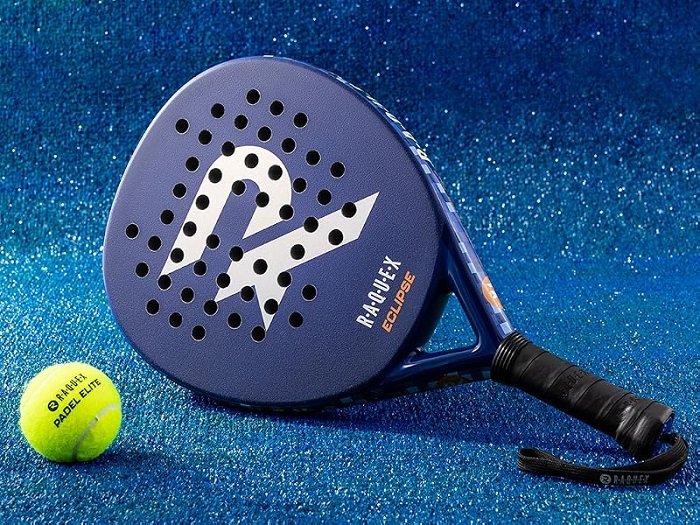
The Raquex Eclipse makes most sense once you're playing padel regularly and want to improve different parts of your game. Its balanced design helps you move between defensive returns and net exchanges without prioritising outright power. Compared with the cheaper Aurox, its foam core and textured face offer a mix of impact feel and spin potential. It's a considered upgrade, not an essential first purchase.
Pros
- 265mm mid-balance supports an all-round playing style
- Large sweet spot helps with controlled returns
- EVA foam reduces harshness on ball contact
- SpinTec texture suits players learning sliced shots
- Twin-air frame construction promotes an even feel
05
The RYZE PEGASUS suits a beginner who has found their feet and wants to build a more attacking style. Its teardrop shape favours confident swings and forward play, while the carbon construction gives a firmer response than the softer starter rackets. Unlike the VANTA bundle, the appeal here is how the racket plays rather than the extras.
Pros
- Teardrop profile suits developing overhead shots
- Carbon construction gives direct ball feedback
- EVA core adds cushioning at contact
- Anti-shock grip helps dampen vibration
- Cover protects the racket on the way to court
Buying Guide & FAQ
How to Choose Your First Padel Racket
Start With the Right Racket Shape
Padel rackets generally come in three shapes, and each affects how the racket feels when you strike the ball.
-
Round: Usually the easiest for beginners. A larger, centrally positioned sweet spot makes it more forgiving when you don't hit the ball perfectly.
-
Teardrop: Offers a balance between control and power. Worth considering if you've played other racket sports and feel comfortable with basic shots.
-
Diamond: Typically designed for attacking players, with a higher sweet spot and more demanding handling. Usually less suitable for a first racket.
For most beginners, a round racket is the safest starting point while learning consistent contact and placement.
Choose a Comfortable Weight and Balance
A racket that's too heavy can make quick reactions at the net harder and leave your arm feeling tired.
Many adult beginners find rackets around 340–365g comfortable, although the right weight depends on your strength, experience and personal preference.
Balance matters just as much:
-
Low balance: Easier to manoeuvre and generally better for control.
-
Medium balance: A compromise between handling and attacking power.
-
High balance: Can add momentum to shots but feels more demanding to swing.
Look for a Softer Core
The material inside a padel racket affects its feel when hitting the ball. Soft EVA and other softer foam cores generally provide a more comfortable, forgiving response at lower swing speeds. Firmer cores can offer a more direct feel but may be less comfortable when you're still developing your technique. Fibreglass faces often provide a softer feel than stiffer carbon constructions, although the racket's overall design also makes a difference.
Can Beginners Use a Carbon Padel Racket?
Yes. Carbon construction isn't automatically unsuitable for beginners, but some stiff, advanced carbon rackets can be harder to handle. A forgiving carbon model with a suitable weight and balance can work well. However, fibreglass or mixed-material rackets are often worth considering for their softer feel and value.
Tips for Beginners: How to Play Better Padel
You don't need powerful shots to enjoy padel or win rallies. Learning how to position yourself, control the ball and use the glass walls will make a bigger difference than swinging harder.
-
Focus on control, not power: Use short, controlled swings and aim to keep the ball in play. Trying to hit every shot hard often leads to unnecessary mistakes.
-
Hold your racket correctly: Start with a continental grip, similar to holding a hammer. It's a versatile grip that works well for forehands, backhands and volleys.
-
Keep your racket ready: Hold it in front of your body with both hands between shots. This helps you react faster, especially when opponents hit towards you at the net.
-
Learn to use the glass walls: Unlike tennis, you can let the ball bounce off your back glass after it lands on your side. Practise waiting for the rebound rather than rushing every shot.
-
Move with your partner: Padel is usually played in doubles. Try to move forwards and backwards together so you don't leave large gaps for opponents to exploit.
-
Use the lob: A well-placed lob can push opponents away from the net and give you time to move into a better position. It's one of the most useful shots for beginners.
-
Don't rush towards the net: Move forwards when you've played a shot that puts your opponents under pressure, rather than charging in after every return.
-
Practise your serve: Serve underarm after bouncing the ball, making contact at or below waist height. Focus on accuracy and consistency rather than speed.
Beginner's tip: During your first few games, aim to keep rallies going rather than winning every point with one shot. You'll develop better timing, footwork and confidence as you play.
🏆 Our Top 3 Picks
