6 Best Lumbar Supports for Car (UK 2026 Review)

✓ Reviewed by the IDEAL PICKS Team
Best Car Lumbar Supports for Daily Commutes and Longer Journeys
Your car seat might feel perfectly comfortable on a short trip, then leave your lower back stiff after an hour on the motorway. A lumbar support can help fill the gap behind your waist, but the wrong cushion can push you too far forwards or make an otherwise comfortable seat feel awkward. Shape, thickness and a secure fit matter more than simply choosing the softest-looking option.
Our selection of the best lumbar supports for car seats covers different designs, materials and comfort preferences. Below, you’ll find the options worth considering, along with practical advice on choosing the right support and positioning it correctly for everyday driving.
Quick PickS




 01
01
KOYOSO's lumbar cushion suits drivers who prefer a shaped support with an easy-clean finish. The memory foam sits against the lower back, filling space between your waist and the seat rather than cushioning the entire backrest. Its leather-look surface is practical for everyday car use, and the securing strap helps keep it positioned when you get in or out. It also works on office chairs.
Pros
- 10cm depth provides a substantial cushioned profile
- Wipe-clean finish suits everyday car interiors
- Strap helps keep the cushion at your preferred height
- Compact width leaves room around the sides of the seat
- Easy to move between driving and desk work
02
The Ovyuzhen set combines a lumbar cushion with a separate neck pillow, giving drivers two points of support in one purchase. Both pieces use memory foam, with adjustable straps to help position them on the seat. Breathable covers are welcome on warmer journeys, and the removable fabric makes cleaning more convenient. The matching design also suits a home office chair between drives.
Pros
- Two separate pieces allow individual positioning
- Neck pillow adds support beyond the lower back
- Honeycomb fabric encourages ventilation
- Clip fastenings make moving the cushions easier
- Washable covers suit frequent everyday use
03
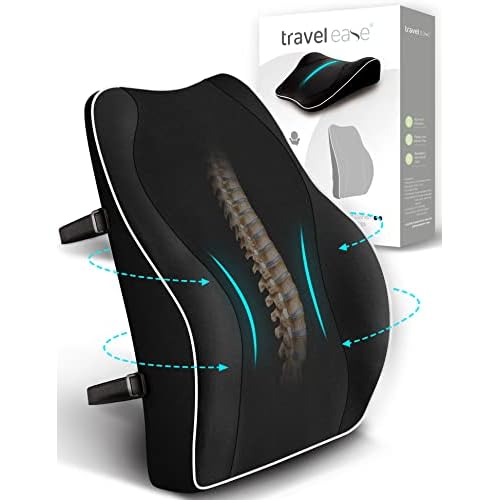
Travel Ease covers a larger section of the backrest than a compact waist cushion, making it worth considering for drivers who prefer broader contact. Its contoured memory foam is held by two straps, reducing the need to reposition it after getting into the car. A breathable, washable cover suits regular commuting, while the generous dimensions are useful for comparing its fit against your existing seat.
Pros
- 43cm width provides generous backrest coverage
- Dual fastening straps help limit movement
- Long strap adjustment accommodates different seat backs
- Washable fabric suits regular commuting
- Broad profile also works well on office chairs
Cons
- 43cm width may not suit smaller car seats
04
POOTACK focuses on a secure fit and everyday practicality for people who move between driving and desk work. Two adjustable straps help hold the memory foam cushion against the lower section of a seat, while the ventilated mesh cover suits warmer days. Its removable cover can be washed after regular use, and the familiar contoured shape is easy to position in different chairs.
Pros
- Two straps offer more positioning control than a single fastening
- Mesh fabric allows air to circulate around the back
- Cover can be removed for straightforward cleaning
- Contoured foam fills the lower-back gap
- Works across car seats and several chair types
05
Everlasting Comfort offers a straightforward memory foam cushion for drivers who want extra lower-back contact without a complicated fitting process. Its shaped profile follows the curve behind the waist, and the breathable mesh cover makes it suitable for daily use. The cover can be removed for washing, while the portable design makes switching between a car seat and a desk chair simple.
Pros
- Among the lowest-priced options in this selection
- Firm foam gives the lower back a defined resting surface
- Removable mesh cover is practical for daily use
- Easy to carry between car and workplace
- Simple cushion design needs no specialist installation
06
Lofty Aim takes a more compact approach to car lumbar support, fitting into the lower-back area without covering much of the seat. Its memory foam cushion has adjustable straps and a grippy underside to help it stay in place. The mix of mesh and wipe-clean PU leather makes sense for frequent journeys, especially when you want a support that is easy to maintain.
Pros
- Smaller shape leaves more of the original backrest exposed
- Non-slip underside adds grip against upholstery
- Elastic straps make height adjustments straightforward
- PU leather panels wipe clean easily
- Also among the lowest-priced cushions listed
Buying Guide & FAQ
How to Choose the Right Car Lumbar Support
Start With Your Car Seat
Before buying an additional cushion, check whether your car already has adjustable lumbar support. Some seats let you move the support inwards or outwards, and certain models also allow height adjustments. If your seat doesn't offer enough support, consider where the gap is between your lower back and the backrest. A small gap may only need a slim lumbar roll, whereas a flatter seat might benefit from a broader, contoured cushion.
Compare the Different Types of Lumbar Support
Different designs offer different levels of cushioning and adjustment.
-
Memory foam cushions: Mould to the shape of your back and can provide comfortable, cushioned support. Their firmness may change with temperature.
-
Lumbar rolls: Small, cylindrical cushions that provide targeted support without covering the entire backrest.
-
Mesh supports: Usually have a curved, flexible frame that supports the lower back while allowing airflow. They can feel firmer than padded cushions.
-
Inflatable cushions: Allow you to adjust the amount of support by adding or releasing air. They're also convenient for travelling between vehicles.
Check Seat Compatibility and Safety
Not every lumbar cushion fits every car seat. Deep side bolsters, narrow backrests and built-in seat adjustments can all affect how securely a cushion sits.
Before buying, check:
-
Dimensions: The cushion should fit comfortably within the backrest without interfering with the seat's shape.
-
Attachment straps: These should hold it securely without obstructing seat controls or safety equipment.
-
Side airbags: Check your vehicle handbook. Straps and cushions must not interfere with seat-mounted airbag deployment areas.
-
Cover: A removable, washable cover is useful for keeping the cushion clean, especially with frequent use.
Tips for Using Lumbar Support While Driving
Even a well-designed cushion can feel uncomfortable when positioned incorrectly. Adjusting your seat and support together makes a noticeable difference.
-
Adjust your seat first: Sit fully back in the seat and set the backrest at a comfortable, slightly reclined angle. Avoid leaning forwards to reach the steering wheel.
-
Position the support at waist level: Place it in the natural inward curve of your lower back, just above your pelvis. It shouldn't press into your upper back.
-
Check your reach: You should be able to operate the pedals comfortably with a slight bend in your knees and hold the steering wheel without stretching your arms.
-
Start with gentle support: If you're using an inflatable or adjustable cushion, begin with a modest amount of support and increase it only if needed.
-
Test it on a short journey: Check whether the cushion stays in place and remains comfortable. Make any adjustments while safely parked.
-
Take breaks on longer drives: Aim to stop for at least 15 minutes every two hours so you can get out, walk around and change position.
Practical tip: Before spending money on a cushion, try placing a small rolled towel behind your lower back while sitting in your parked car. It can help you judge whether additional lumbar support feels comfortable and approximately how much thickness you need.
Can Lumbar Support Help With Back Pain While Driving?
A lumbar cushion may help reduce discomfort if your car seat doesn't adequately support your lower back. It can make it easier to maintain a comfortable sitting position, particularly on longer journeys. However, a cushion won't address every cause of back pain. Seat adjustment, regular movement and your individual needs are equally important. Persistent or worsening pain should be assessed by a healthcare professional.
🏆 Our Top 3 Picks

