5 Best Weed Killers (UK 2026 Review)
✓ Reviewed by the IDEAL PICKS Team
Best Weed Killers for UK Lawns, Patios and Stubborn Weeds
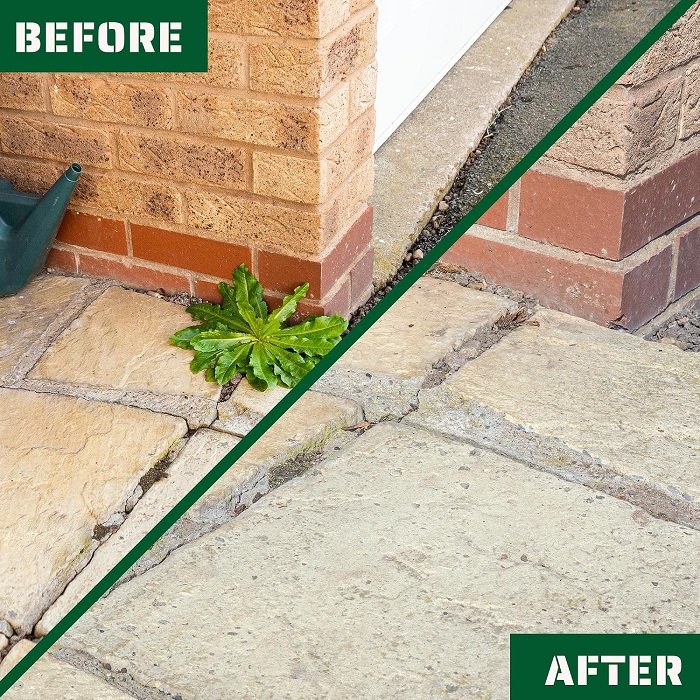
Weeds growing between patio slabs are frustrating enough, but finding dandelions spreading across your lawn or bindweed taking over your flower beds is another problem entirely. Different weeds need different treatments, and using the wrong weedkiller can damage the grass or plants you’re trying to protect.
Our reviews of the best weed killers for UK gardens focus on effectiveness, ease of application, coverage and value for money. Whether you’re tackling stubborn roots, clearing a driveway or dealing with lawn weeds, we’ll help you understand which type of treatment suits the job and how to use it correctly.
Quick PickS


 01
01
Roundup Fast Action Pump 'N Go Refill makes sense if you already have the matching sprayer and want to keep on top of weeds around the garden. The ready-mixed liquid saves measuring concentrate, and the five-litre bottle offers plenty for repeated maintenance. Its systemic action treats weed growth through the foliage, making it useful for approved areas where unwanted plants regularly return.
Pros
- Uses your existing Pump 'N Go sprayer
- Ready-mixed liquid avoids measuring errors
- Five-litre refill supports several garden jobs
- Systemic treatment reaches beyond visible foliage
- Refill option avoids buying another spray mechanism
02
Elixir Gardens comes as two one-litre bottles of concentrated glyphosate weedkiller, making it a practical format for repeated jobs across larger areas. Its systemic action is designed for established weeds, while the measuring cup keeps an essential accessory close at hand. The pack also includes gloves. Before buying, match the registration on the bottle to the intended location and user category.
Pros
- Two bottles are convenient for staged maintenance
- Smaller storage footprint than equivalent ready-mix
- Measuring cup helps with label-directed preparation
- Gloves supplied in the package
- Concentrated pack suits extensive permitted work
03
JOVS is a ready-mixed acetic-acid weedkiller for dealing with visible growth on suitable hard surfaces. Its contact action works on the leaves and stems it touches, which makes it especially relevant to young weeds appearing between patio slabs or along paths. The twin five-litre containers provide a generous supply, so routine maintenance need not involve preparing fresh batches of concentrate.
Pros
- Two containers are easier to carry than a 10L drum
- Useful for small patches on approved paved areas
- Contact formula acts directly on treated growth
- No separate mixing equipment needed
- Acetic-acid option offers a different approach from glyphosate
04
Doff Advanced Concentrated Weedkiller is packaged in ten individual sachets, useful when garden maintenance happens in smaller, occasional sessions. You can open a portion as needed and keep the rest sealed for later. Its systemic formulation is intended for unwanted vegetation on authorised treatment areas. The measured format is particularly helpful for storage and planning, provided preparation follows the instructions on the pack.
Pros
- Ten sealed portions help minimise leftover opened concentrate
- Easy to store between seasonal gardening jobs
- Convenient pack for treating separate problem patches
- Systemic formula targets growth beyond the leaves
- Low entry price within this selection
05
Gallup Biograde Ready to Use is convenient for treating separate patches of weeds without preparing a concentrate. Its four-litre container offers more liquid than a small handheld spray, and the included trigger is useful when working around individual problem spots. The glyphosate formulation works systemically through treated vegetation. It suits recurring maintenance on outdoor areas approved by the product's current UK label.
Pros
- Supplied trigger supports targeted application
- Ready-mixed formula avoids handling concentrate
- Four litres suits several maintenance sessions
- Systemic action is relevant to established weeds
- No additional dilution equipment required
Buying Guide & FAQ
How to Choose the Best Weed Killer
Match the Weed Killer to the Area
The first thing to consider is where the weeds are growing. A treatment suitable for paving may be completely wrong for your lawn.
-
Lawns: Selective lawn weedkillers target certain broad-leaved weeds, such as dandelions and daisies, while leaving suitable lawn grasses largely unaffected when used correctly.
-
Patios and driveways: Look for treatments specifically approved for the surface and situation you're treating.
-
Flower beds: Targeted application is important because non-selective sprays can damage nearby flowers and shrubs.
-
Deep-rooted weeds: Established perennials may need repeated removal or a suitable systemic treatment to control regrowth.
For small patches, pulling weeds out by hand can be just as practical and avoids unnecessary chemical treatment.
Understand Systemic and Contact Weed Killers
Not all weedkillers work in the same way.
Systemic weedkillers are absorbed by the plant and transported to other parts, potentially including the roots. They're generally more suitable for established perennial weeds, although results take time.
Contact weedkillers damage the parts of the plant they touch. They can produce visible results relatively quickly, but deep-rooted weeds may grow back.
If you're dealing with recurring weeds, consider whether the treatment actually reaches the roots rather than simply making the leaves turn brown.
Ready-to-Use Spray or Concentrate?
Ready-to-use sprays are convenient for occasional jobs and small areas. There's no measuring or mixing, and they're useful for treating individual weeds.
Concentrates can offer better value for larger areas, but you'll need appropriate application equipment and must follow the dilution instructions precisely.
Check the coverage in square metres rather than comparing bottle sizes alone.
Check Safety and UK Approval
Only buy weedkillers authorised for amateur use in the UK, and check that the label permits your intended application.
Pay particular attention to restrictions around children, pets, ponds, drains and edible plants. Never assume that a product described as natural or glyphosate-free is automatically harmless.
Tips for Using Weed Killers Effectively
Correct application matters just as much as choosing a suitable treatment.
-
Identify the weeds first: Annual weeds are often easier to remove, while established perennials may need repeated treatment.
-
Choose suitable weather: Avoid spraying in windy conditions or when rain could wash the treatment away before the specified drying period.
-
Target the weeds carefully: Keep sprays away from desirable plants and avoid unnecessary treatment of surrounding areas.
-
Follow the recommended dose: Increasing the concentration won't necessarily improve results and may cause damage.
-
Give the treatment time: Systemic weedkillers may take days or weeks to show their full effect.
-
Keep children and pets away: Follow the product's specific instructions about when treated areas can be used again.
-
Prevent new growth: Mulching borders, removing weeds before they set seed and maintaining healthy lawns can reduce future problems.
Gardening tip: If weeds repeatedly appear between paving slabs, remove accumulated soil and debris from the joints and repair damaged pointing where appropriate. This can help prevent new weeds from establishing.
Which Weed Killer Is Best for Killing Weeds Down to the Roots?
A suitable systemic weedkiller can be more effective against established perennial weeds because it moves through the plant rather than only damaging the foliage.
However, results depend on the weed species, growing conditions and product instructions. Some particularly stubborn weeds may require repeated control.
Can You Use Weed Killer on a Lawn Without Killing the Grass?
Yes, but you need a selective weedkiller specifically labelled for use on your type of lawn. General-purpose non-selective weedkillers can damage or kill grass.
Follow the application instructions carefully, especially regarding dosage, mowing and recently established lawns.
How Long Does Weed Killer Take to Work?
Contact weedkillers may show visible effects within hours or days, while systemic treatments often take longer.
Temperature, weed size and growing conditions all influence results. Always check the manufacturer's expected treatment time before deciding whether another application is necessary.
🏆 Our Top 3 Picks

